
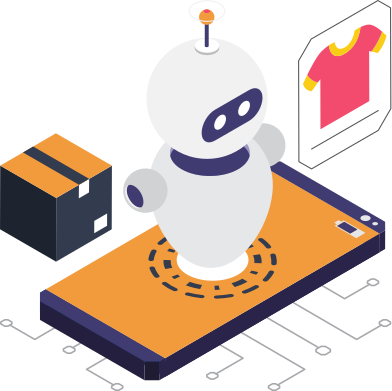


 AI in retail refers to the use of artificial intelligence technologies to personalize product recommendations, forecast demand, optimize pricing, automate checkout, and streamline supply chains across physical stores and ecommerce channels.It draws on several underlying technologies: machine learning for pattern recognition in sales and browsing data, computer vision for in store checkout and shelf monitoring, generative AI and AI agents for customer facing conversations and back office order handling, and recommendation engines that connect product catalogs to individual shopper behavior.
Retailers have used loyalty programs and basic analytics for decades. What has changed is scale and immediacy: modern AI Retail Solutions can personalize an offer for a single shopper in real time, analyze millions of transactions to forecast demand at the SKU and store level, and increasingly hold multi step conversations that help a customer find a product or resolve an order issue without waiting for a human agent.
AI in retail refers to the use of artificial intelligence technologies to personalize product recommendations, forecast demand, optimize pricing, automate checkout, and streamline supply chains across physical stores and ecommerce channels.It draws on several underlying technologies: machine learning for pattern recognition in sales and browsing data, computer vision for in store checkout and shelf monitoring, generative AI and AI agents for customer facing conversations and back office order handling, and recommendation engines that connect product catalogs to individual shopper behavior.
Retailers have used loyalty programs and basic analytics for decades. What has changed is scale and immediacy: modern AI Retail Solutions can personalize an offer for a single shopper in real time, analyze millions of transactions to forecast demand at the SKU and store level, and increasingly hold multi step conversations that help a customer find a product or resolve an order issue without waiting for a human agent.Most AI Retail Solutions follow a similar underlying process, regardless of the specific use case:
Gathered from point of sale systems, ecommerce platforms, loyalty programs, and store cameras.

Cleaned and standardized across legacy POS systems, ecommerce, and marketing tools.

ML models forecast demand and personalize, vision models monitor checkout, and AI agents plan tasks.

Results reach merchandisers, store managers, or shoppers through dashboards and personalized feeds.

Outcomes such as ignored recommendations or missed demand spikes improve accuracy over time.
The most established and highest impact AI Use Cases in Retail, spanning merchandising, store operations, customer experience, and the supply chain.
AI analyzes browsing history and real time behavior to recommend products each shopper is more likely to want, online and increasingly in store.
Benefit:
Wappnet's own GPT powered recommendation engine delivered a 32 percent increase in conversions and a 28 percent boost in average order value for the client involved.
AI analyzes historical sales, seasonality, and promotions to predict demand at the SKU and store level.
Benefit:
Fewer missed sales from stockouts and less capital tied up in slow moving inventory.
AI monitors competitor prices, demand signals, and inventory levels to recommend near real time price adjustments.
Benefit:
Better margin capture during high demand periods and faster markdown decisions on slow moving stock.
Cameras and shelf sensors track items a shopper takes, charging their account automatically on exit.
Benefit:
Shorter checkout lines. Amazon's Just Walk Out technology, now licensed to hundreds of third party venues, is a widely documented example in production use.
Shoppers search using an image instead of keywords, matching visually similar items across the catalog.
Benefit:
Easier product discovery, which can reduce search abandonment on ecommerce sites.
Generative AI chat and voice assistants help shoppers find products and get answers to sizing, shipping, or return questions.
Benefit:
Faster, consistent answers that free human staff for complex or sensitive cases.
AI agents handle multi step processes such as processing a return or resolving an order discrepancy across systems.
Benefit:
Faster resolution of order issues and less manual back and forth between teams and systems.
AI analyzes supplier performance and demand forecasts to optimize replenishment and flag disruptions early.
Benefit:
Fewer stockouts from supply disruptions and more reliable delivery promises to customers.
AI analyzes transaction patterns, return behavior, and in store video to flag activity consistent with theft or fraud.
Benefit:
Reduced shrinkage and fraud losses without slowing checkout for legitimate shoppers.
AI guided robotics pick, pack, and move inventory through fulfillment centers with less manual handling.
Benefit:
Ocado's Smart Platform, licensed to grocery retailers such as Kroger, shows this model operating in live production fulfillment centers.
AI analyzes reviews, support tickets, and social mentions to surface recurring product or service issues.
Benefit:
Faster identification of quality or service issues before they escalate into returns or churn.
AI optimizes which ads, promotions, and on site placements are shown to which shoppers across channels.
Benefit:
Better return on marketing and retail media spend, an increasingly important revenue line for retailers.
Across the use cases above, the recurring, measurable benefits of AI Retail Solutions fall into a few consistent categories.

Automating checkout, customer service, and fraud review reduces labor and loss costs.

Merchandisers and store staff spend less time on repetitive tasks and more on judgment based work.

AI assisted pricing, forecasting, and fulfillment shorten time from demand shift to stocked shelf.

Relevant recommendations, shorter lines, and faster support improve satisfaction and repeat purchases.

Demand forecasting and sentiment analysis give teams data backed input instead of intuition alone.

Fraud detection and loss prevention catch problems earlier than periodic manual review.

AI systems personalize and monitor across far more shoppers and stores without added headcount.

Warehouse automation and supply chain optimization reduce waste and delay across the business.
How Artificial Intelligence in the Retail Industry adoption differs across major business functions.

Demand forecasting, dynamic pricing, and assortment planning based on predicted local demand.

Personalized recommendations, retail media optimization, and behavior based segmentation.

Cashierless checkout, self checkout fraud monitoring, and shelf availability tracking.

Conversational AI for routine questions and AI agents for order and return handling.
Supplier risk monitoring, replenishment optimization, and fulfillment automation.

Fraud detection across transactions and returns, and vision based checkout monitoring.

Demand and revenue forecasting that ties merchandising decisions to financial planning.
The technical building blocks behind today's AI Powered Personalization in Retail projects.

Powers demand forecasting, dynamic pricing, and fraud detection.

Drives cashierless checkout, shelf monitoring, and loss prevention.

Support conversational shopping assistants and customer service at scale.

Handle multi step workflows like return processing and order resolution.

Connect product catalogs to individual shopper behavior for personalization.

Lets generative AI answer using a retailer's own catalog and policies.

Connect AI systems to transaction data and provide scalable compute.
Adopting AI across stores and ecommerce channels comes with real considerations that shouldn't be glossed over.

Personalization and forecasting models are only as good as the data unified across POS, ecommerce, and loyalty systems.

Retail AI often touches payment details and personal shopping history, so PCI aligned handling must be designed in from the start.

Customer facing generative AI must be grounded in a retailer's actual catalog and policies.

Store staff and merchandisers need to trust AI recommendations before relying on them.

Older point of sale and inventory systems often need work to connect with modern AI platforms.

A model tuned for one region or channel does not automatically transfer to another.

Ongoing model monitoring and retraining carry real cost that should be budgeted for upfront.

Identify a specific, high value problem rather than starting with "AI" as the goal.

Assess POS, ecommerce, and inventory data quality and identify integration gaps.

Build with data privacy, payment security, and explainability in the architecture.

Connect to store and ecommerce systems and validate accuracy on a pilot.

Roll out in phases and track performance against defined metrics.

Refine models as customer behavior shifts and expand to adjacent use cases.
What to look for in a partner for AI in Retail initiatives, and how Wappnet approaches each one.

Hands on experience across machine learning, computer vision, generative AI, and AI agent development, paired with real ecommerce domain knowledge.

Ecommerce development, retail CRM and loyalty integration, ERP for inventory, and UI/UX for shopping experiences.

A GPT powered recommendation engine delivered a 32 percent increase in conversions and a 28 percent boost in order value.

From discovery through deployment and ongoing optimization, managed as one continuous engagement.

Data protection, payment security, and access control built into every AI Retail Solution from day one.

Solutions built to expand from a single store or category pilot to a full network without a costly rebuild.

Post launch monitoring and model refinement as catalogs, promotions, and behavior evolve.
The use cases above are proven, in production applications of AI in Retail, not speculative technology. The right starting point depends on your store footprint, ecommerce platform, and operational priorities.
AI in retail is the use of artificial intelligence technologies, including machine learning, computer vision, and AI agents, to personalize product recommendations, forecast demand, optimize pricing, automate checkout, and streamline supply chains across physical stores and ecommerce channels.
AI systems collect data from point of sale systems, ecommerce platforms, and store cameras, process it using machine learning or computer vision models, and deliver decisions or insights through dashboards, personalized product feeds, or conversational interfaces integrated into existing retail workflows.
The most common use cases include personalized product recommendations, demand forecasting, dynamic pricing, cashierless checkout, conversational shopping assistants, and AI agents for customer service and order management.
No. AI is designed to support decision making and automate repetitive or error prone tasks, not replace the judgment, hands on service, and relationship building that retail work requires. Human staff remain essential for complex customer issues, in store guidance, and exception handling.
Return on investment depends heavily on the specific use case, data readiness, and channel involved. Narrow, well scoped use cases such as personalization on a high traffic product category tend to show measurable results faster than broad, chainwide AI transformations attempted all at once.
AI improves customer experience through more relevant product recommendations, faster checkout with less waiting, and conversational assistants that answer routine questions immediately instead of requiring a wait for a human agent.
Traditional automation follows fixed, rule based steps, while AI agents can interpret context, make decisions, and manage multi step workflows, such as verifying a return and issuing a refund, with less manual configuration.
Generative AI and large language models are used for conversational shopping assistants grounded in a retailer's own catalog and policies, product description generation, and customer service response drafting.
The most common challenges are unifying fragmented data across point of sale, ecommerce, and loyalty systems, protecting customer payment and personal data in line with privacy and PCI requirements, integrating with legacy retail systems, and building trust in AI generated recommendations among merchandising and store teams.
Both physical store retail and ecommerce see measurable benefits, though the specific use cases differ. Ecommerce brands tend to see the fastest results from personalization and recommendation engines, while store based retailers often start with demand forecasting, checkout automation, or loss prevention.
It varies by use case and data readiness. Narrow, well instrumented use cases like personalization on an existing ecommerce platform tend to show measurable results faster than broad initiatives like a full cashierless checkout rollout across many stores, which requires more extensive hardware and integration work.
Not always. Some use cases can be addressed with existing AI powered platforms and ecommerce plugins, while others, particularly those involving a retailer's proprietary catalog structure or unusual fraud patterns, benefit from custom built models trained on that retailer's own data.
Cost depends heavily on scope, existing data infrastructure, and whether the solution integrates with current point of sale and ecommerce systems or requires new hardware such as in store cameras. A narrowly scoped use case typically costs less and delivers results faster than a full chainwide AI transformation.
AI systems can operate securely with customer payment and personal data when data protection practices, access controls, and PCI aligned handling are designed into the architecture from the start. Security depends on how the solution is implemented and governed, not on the underlying AI technology alone.
As the tech world is getting more and more fast-paced, new developments can get hard to follow. But, don't worry, we got you covered. We have various articles to help you follow new trends and decide which IT solution is a perfect fit for you and your goals.
Budgeting a SaaS product is hard because two products with the same idea can differ in cost by 10x. This guide breaks down SaaS product development cost in 2026 with realistic pricing ranges, regional rates,...
Keep Reading
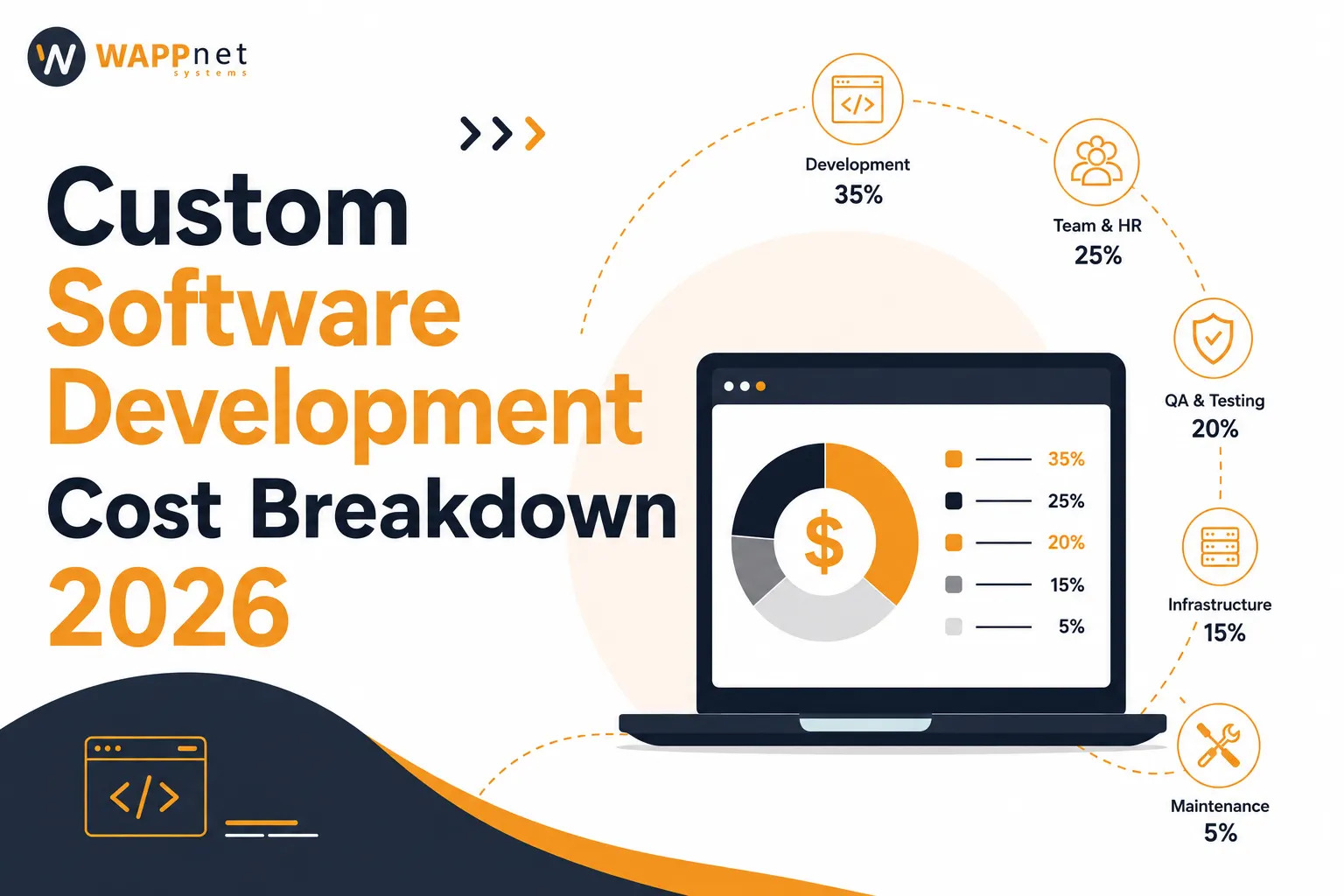
Custom software development cost is the first question every founder and CTO asks before greenlighting a build, and the honest answer in 2026 is that it depends on complexity, region, and team structure.
Keep Reading
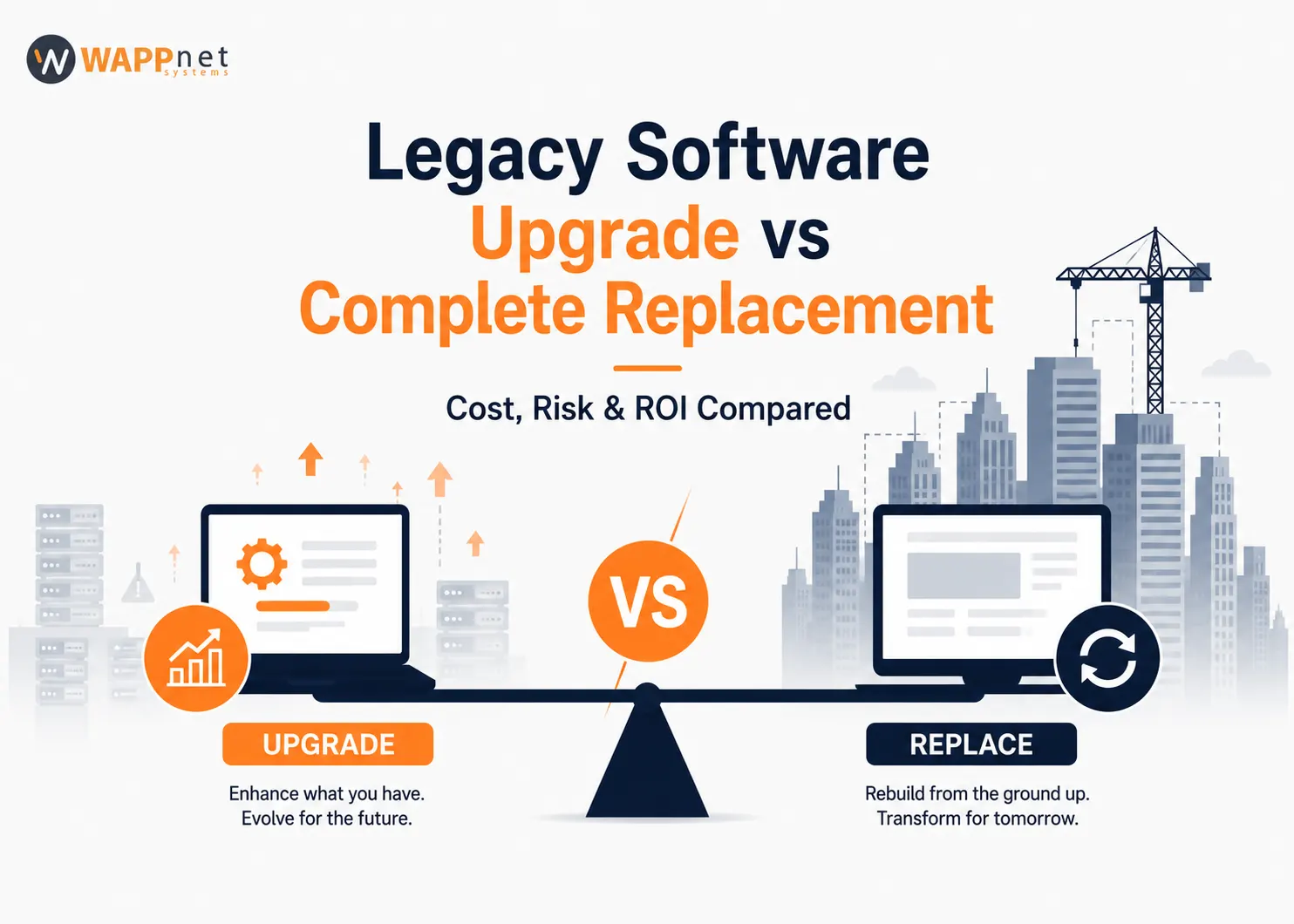
Every CTO managing an aging platform confronts the same question: repair what exists, or rebuild from scratch?
Keep Reading
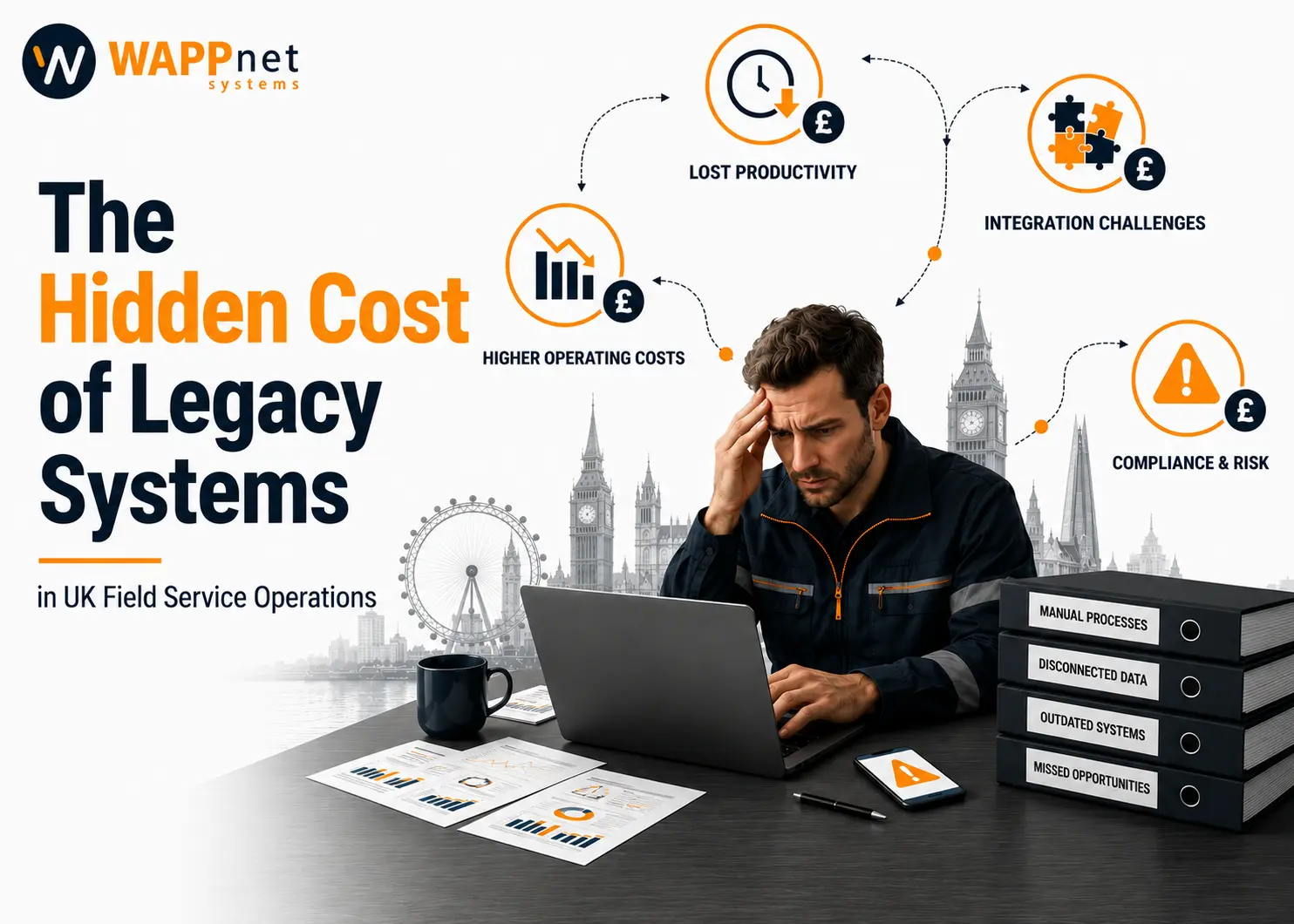
Ask most operations managers at a UK field service company whether their software is good enough, and you'll usually get a shrug. The scheduling spreadsheet still gets jobs out the door.
Keep Reading
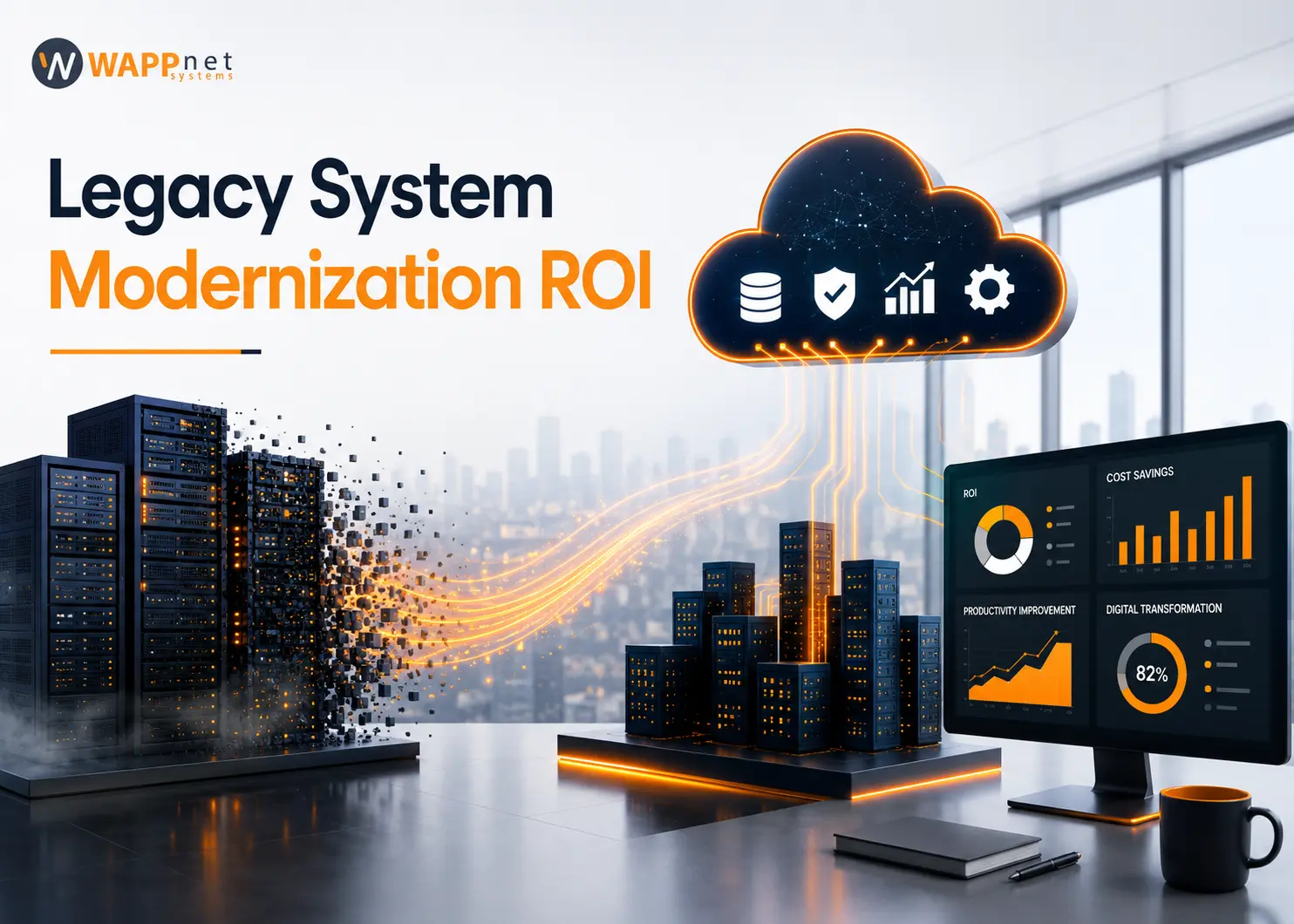
Legacy System Modernization ROI measures the financial and strategic return gained from replacing, re-platforming or upgrading outdated technology, relative to what it costs.
Keep Reading
Every enterprise leader wants an AI roadmap, but fewer ask first: will our existing software actually run it? Can legacy software support AI? is one of the most-searched questions among CIOs today, and the honest...
Keep Reading
Budgeting a SaaS product is hard because two products with the same idea can differ in cost by 10x. This guide breaks down SaaS product development cost in 2026 with realistic pricing ranges, regional rates,...
Keep Reading
Custom software development cost is the first question every founder and CTO asks before greenlighting a build, and the honest answer in 2026 is that it depends on complexity, region, and team structure.
Keep Reading
Every CTO managing an aging platform confronts the same question: repair what exists, or rebuild from scratch?
Keep Reading
Ask most operations managers at a UK field service company whether their software is good enough, and you'll usually get a shrug. The scheduling spreadsheet still gets jobs out the door.
Keep Reading
Legacy System Modernization ROI measures the financial and strategic return gained from replacing, re-platforming or upgrading outdated technology, relative to what it costs.
Keep Reading
Every enterprise leader wants an AI roadmap, but fewer ask first: will our existing software actually run it? Can legacy software support AI? is one of the most-searched questions among CIOs today, and the honest...
Keep Reading
Share a brief about your project and get a guaranteed response within 24 hours.


As a law firm, we needed a cloud solutions company to ease our business. We were having problems with our prior supplier for a client's hosted servers and felt something needed to change. Wappnet Systems opened my eyes to the cloud's potential. Our lawyers can access all client information from the office, home, court, or any place with an internet connection using cloud-based software. Furthermore, cloud-based software makes employee onboarding and training much easier because training can be done remotely now that we have the new software.

Wappnet Systems has become a vital part of our team due to their can-do attitude, incredible work ethic, and eagerness to handle customer problems as if they were their own. We've been blown away by their professionalism and performance, and we're continuing to collaborate on new apps as a team. They have been really understanding of our business goals and they have analyzed our company profiles very well to give us the best product. We would enthusiastically suggest Wappnet Systems as a capable technological partner for high-volume web development.

We deal with one company and one fully integrated enterprise solution with Wappnet Systems, which covers all aspects of the Factor business processes, including Integrated Accounting, Human Resources, and Payroll, Work Order / Docket Management, Production Control and Management, Inventory Control and Order Management, Automated Pricing, Dealer Self-Service Portals for order placement and production tracking, Customer Relationship Management, and more.

I have worked with Wappney Systems with application development and consultation. The team that worked on my project was exceptional, and the entire process was flawless. Wappnet Systems has recommended the finest design options for my app. They advised me on the best course of action for my app. They keep you informed about the status of your app at all times. It's been a pleasure to work with their staff. We now have two fantastic apps that were completed in less time than anticipated. Working with Wappnet Systems provided us with a great value-to-money ratio. I would suggest them to anyone looking to get an app developed quickly and for a reasonable price.

During our search for Chatbot programming services, we came across Wappnet Systems. We have increased the motivation and productivity of our staff as a result of their service - a chatbot answers repetitive and straightforward queries for them. We can now give our clients round-the-clock service, which makes them happier and more eager to stick with us. I enjoy how easy it is to interface with other programs — it simply takes one click to connect to your website or Messenger. For the most part, it was a pretty enjoyable experience for me.

Wappnet Systems came through for us when we required customized WordPress development. Many of our employees struggled to understand WordPress and how to make modifications without damaging the system, however, this team of Wappnet Systems was able to accomplish it without breaking anything and without interfering with my existing ordering mechanism. This is perfect since I've had other developers make adjustments, and their work reset mine, requiring me to redo stuff. Wappnet Systems hasn't made me experience this, and I don't expect it to do so.




Wappnet Systems technical skill was outstanding, and they collaborated with our team to assist us to achieve consistent outcomes. They were always willing to work with our schedules and meet our goals. I advise you to choose Wappnet Systems for your future software development project. They not only have a wealth of skill and expertise, but they also encourage project ownership and look after their employees to keep tacit knowledge on the team. The team takes the time to comprehend the project's scope and never an over-commits time or technical outputs. All this contributes to greater project implementation on time, which end customers will appreciate.