
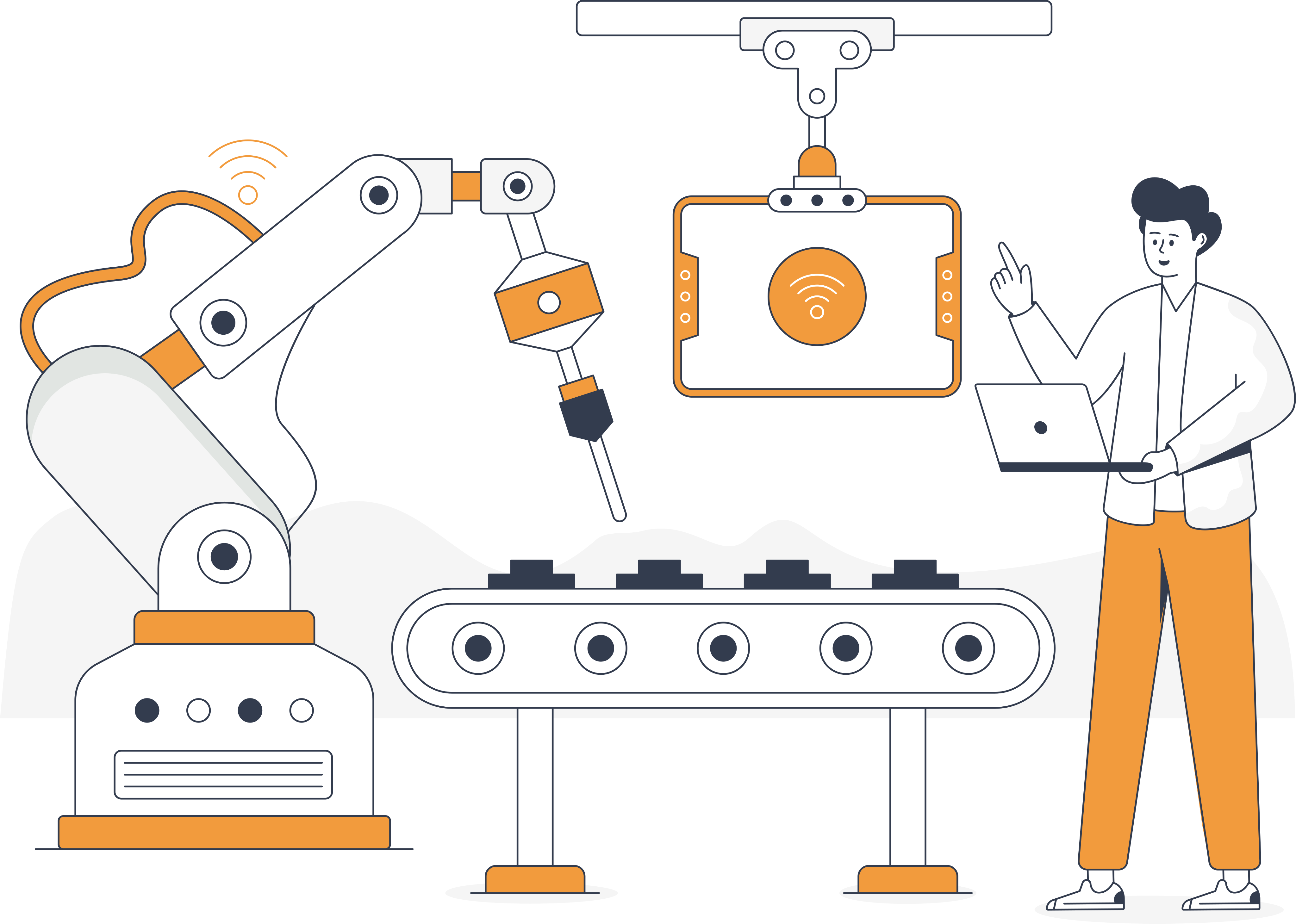


 AI in manufacturing refers to the use of artificial intelligence technologies to predict equipment failures, automate quality inspection, optimize production schedules, and streamline supply chains across the factory floor and back office.
 It draws on several underlying technologies: machine learning for pattern recognition in sensor and production data, computer vision for visual quality inspection, generative AI and AI agents for knowledge work and multi step process automation, and industrial IoT sensors for the real time data these systems depend on.
Manufacturers have used statistical process control and automation for decades. What has changed is scale and responsiveness: modern AI Manufacturing Solutions can analyze data from thousands of sensors in real time, spot visual defects that are easy for a fatigued human inspector to miss, and increasingly plan and execute multi step tasks such as maintenance scheduling or supply chain exception handling with limited human intervention.
It draws on several underlying technologies: machine learning for pattern recognition in sensor and production data, computer vision for visual quality inspection, generative AI and AI agents for knowledge work and multi step process automation, and industrial IoT sensors for the real time data these systems depend on.
Manufacturers have used statistical process control and automation for decades. What has changed is scale and responsiveness: modern AI Manufacturing Solutions can analyze data from thousands of sensors in real time, spot visual defects that are easy for a fatigued human inspector to miss, and increasingly plan and execute multi step tasks such as maintenance scheduling or supply chain exception handling with limited human intervention.Most AI Manufacturing Solutions follow a similar underlying process, regardless of the specific use case:
Gathered from sensors, cameras, machine logs, and existing ERP or MES systems.

Cleaned and standardized across legacy PLCs and modern IIoT sensors.
ML models forecast failures, vision models inspect products, and AI agents plan multi step tasks.

Results reach plant managers, technicians, and quality teams through dashboards and alerts.

Outcomes such as false alarms or missed defects improve model accuracy over time.
The most established and highest impact AI Use Cases in Manufacturing, spanning maintenance, quality, production planning, and the supply chain.
AI monitors machine health using vibration and temperature data to flag wear before a breakdown occurs.
Benefit:
Fewer unplanned stoppages. McKinsey research finds predictive maintenance typically cuts downtime by 30 to 50 percent.
Computer vision inspects products on the line for scratches, dimensional errors, and contamination.
Benefit:
Consistent defect detection across every shift. Siemens reports over 99.9 percent quality at its Amberg plant.
A live virtual model of a line or plant lets engineers simulate changes before touching physical equipment.
Benefit:
BMW cut collision verification from four weeks to about three days using an NVIDIA Omniverse based Virtual Factory.
AI weighs demand, machine availability, and labor constraints to recommend efficient production schedules.
Benefit:
Better equipment and labor utilization without adding shifts or capacity.
AI analyzes sales data and supplier performance to forecast demand and flag supply chain risks early.
Benefit:
Fewer stockouts and earlier warning of disruptions that could halt production.
Computer vision helps robotic arms adapt to part variation instead of relying on fixed coordinates.
Benefit:
Greater flexibility for mixed production runs without extensive reprogramming.
AI assistants give technicians instant access to manuals, maintenance logs, and troubleshooting guidance.
Benefit:
Faster troubleshooting and less dependence on a few experienced staff.
AI correlates energy usage with production volume and equipment settings to identify waste.
Benefit:
Lower energy costs and a smaller environmental footprint.
AI forecasts reorder points and tracks stock levels using sensors and vision systems.
Benefit:
Fewer delays from missing materials and less capital tied up in excess stock.
Agents match purchase orders, reconcile invoices, and update customer order status automatically.
Benefit:
Less manual data entry and faster resolution of procurement exceptions.
AI correlates recurring defects or downtime events with upstream variables across lines and shifts.
Benefit:
Faster resolution of recurring problems instead of treating each incident in isolation.
Vision systems monitor plant floor footage for PPE use, restricted zone entry, and unsafe proximity.
Benefit:
More consistent safety compliance across large facilities and shifts.
Across the use cases above, the recurring, measurable benefits of AI Manufacturing Solutions fall into a few consistent categories.

Automating inspection, maintenance, and reconciliation reduces labor and rework costs.

Operators and technicians spend less time on repetitive checks and more on judgment based work.

AI assisted scheduling and digital twin planning shorten time to a validated result.

Consistent quality and fewer late shipments improve fulfillment reliability.

Root cause analysis and forecasting give plant managers data backed input.

Predictive maintenance and safety monitoring catch problems earlier than manual review.
How Artificial Intelligence in the Manufacturing Industry adoption differs across major business functions.

Predictive maintenance, digital twin simulation, and production scheduling optimization.

Computer vision based defect detection and root cause analysis for recurring issues.

Demand forecasting, supplier risk monitoring, and AI agents for order matching.

Condition monitoring and generative AI knowledge assistants for technicians.

Inventory forecasting and automated stock tracking.
Computer vision based safety monitoring across plant floors.

Energy consumption optimization across equipment and shifts.

Order status automation and more reliable delivery forecasting.
The technical building blocks behind today's Smart Manufacturing with AI projects.
Powers predictive maintenance, forecasting, and root cause analysis.
Drives quality inspection, safety monitoring, and robotic guidance.

Support technician knowledge assistants and documentation search.

Handle multi step workflows like order matching and exception handling.

Create a live virtual replica of a line or plant for simulation.

Provide the real time data predictive maintenance depends on.

Lets generative AI answer using a plant's own manuals and procedures.

Connect AI systems to production data and provide scalable compute.
Adopting AI on a live production floor comes with real considerations that shouldn't be glossed over.

Predictive models are only as good as the sensor and historical failure data feeding them.
Connecting OT equipment to AI systems requires network segmentation and access controls.

Generative AI guidance for technicians must be grounded in a plant's own documentation.
Operators and technicians need to trust AI recommendations before relying on them.
Older machinery often needs sensor or gateway retrofits to become IIoT connected.

A model tuned for one plant does not automatically transfer to another facility.

Identify a specific, high value problem rather than starting with "AI" as the goal.
Assess sensor and data quality and identify instrumentation gaps.

Build with safety, explainability, and OT security in the architecture.
Connect to plant systems and validate accuracy on a pilot line.

Roll out in phases and track performance against defined metrics.
What to look for in a partner for AI in Manufacturing initiatives, and how Wappnet approaches each one.

Hands on experience across machine learning, computer vision, generative AI, and AI agent development, paired with real manufacturing ERP and IoT project experience.

Manufacturing ERP (Odoo based MRP, inventory, quality control), industrial IoT, and plant operations software.

From discovery through deployment and ongoing optimization, managed as one continuous engagement.
Data protection, access control, and OT/IT considerations built into every AI Manufacturing Solution from day one.

Solutions built to expand from a single line or plant to broader AI adoption without a costly rebuild.

Post launch monitoring and model refinement as equipment and volumes evolve.
The use cases above are proven, in production applications of AI in Manufacturing, not speculative technology. The right starting point depends on your facility's specific equipment, data readiness, and operational priorities.
AI in manufacturing is the use of artificial intelligence technologies, including machine learning, computer vision, and AI agents, to predict equipment failures, automate quality inspection, optimize production schedules, and streamline supply chains across plant operations.
AI systems collect data from sensors, cameras, and existing MES or ERP systems, process it using machine learning or computer vision models, and deliver decisions or insights through dashboards, alerts, or work order systems integrated into plant workflows.
The most common use cases include predictive maintenance, AI powered quality inspection, digital twin based production planning, demand forecasting, robotics and automation, and generative AI knowledge assistants for technicians.
No. AI is designed to support decision making and automate repetitive or error prone tasks, not replace the judgment and hands on skill that manufacturing work requires. Human staff remain essential for complex troubleshooting, exception handling, and skilled operations.
Return on investment depends heavily on the specific use case, data readiness, and equipment involved. Narrow, well scoped use cases such as predictive maintenance on a known bottleneck machine tend to show measurable results faster than broad, plant wide AI transformations attempted all at once.
Computer vision models inspect products at production speed, flagging scratches, dimensional errors, and other defects with a consistency that manual visual inspection cannot maintain across a full shift, since human attention naturally declines with fatigue.
Traditional automation follows fixed, rule based steps, while AI agents can interpret context, make decisions, and manage multi step workflows, such as flagging a supply delay and rerouting an order, with less manual configuration.
Generative AI and large language models are used for technician knowledge assistants grounded in a plant's own manuals and maintenance logs, engineering documentation support, and drafting assistance for process and quality teams.
The most common challenges are integrating with legacy equipment that lacks IIoT connectivity, ensuring sensor and historical data is sufficient to train reliable models, securing operational technology systems as they connect to AI platforms, and building trust in AI generated recommendations among plant staff.
Discrete manufacturing such as automotive and electronics, and process manufacturing such as chemicals and food and beverage, both see measurable benefits from predictive maintenance and quality inspection, though the specific use cases and equipment considerations differ by segment.
It varies by use case and data readiness. Narrow, well instrumented use cases like predictive maintenance on a specific machine tend to show measurable results faster than broad initiatives like a full digital twin of an entire plant, which requires more extensive data integration and validation.
Not always. Some use cases can be addressed with existing AI powered platforms, while others, particularly those involving proprietary processes or unusual defect types, benefit from custom built models trained on a manufacturer's own production data.
Cost depends heavily on scope, existing sensor and data infrastructure, and whether the solution integrates with current MES and ERP systems or requires new instrumentation. A narrowly scoped use case typically costs less and delivers results faster than a plant wide AI transformation
As the tech world is getting more and more fast-paced, new developments can get hard to follow. But, don't worry, we got you covered. We have various articles to help you follow new trends and decide which IT solution is a perfect fit for you and your goals.
Budgeting a SaaS product is hard because two products with the same idea can differ in cost by 10x. This guide breaks down SaaS product development cost in 2026 with realistic pricing ranges, regional rates,...
Keep Reading
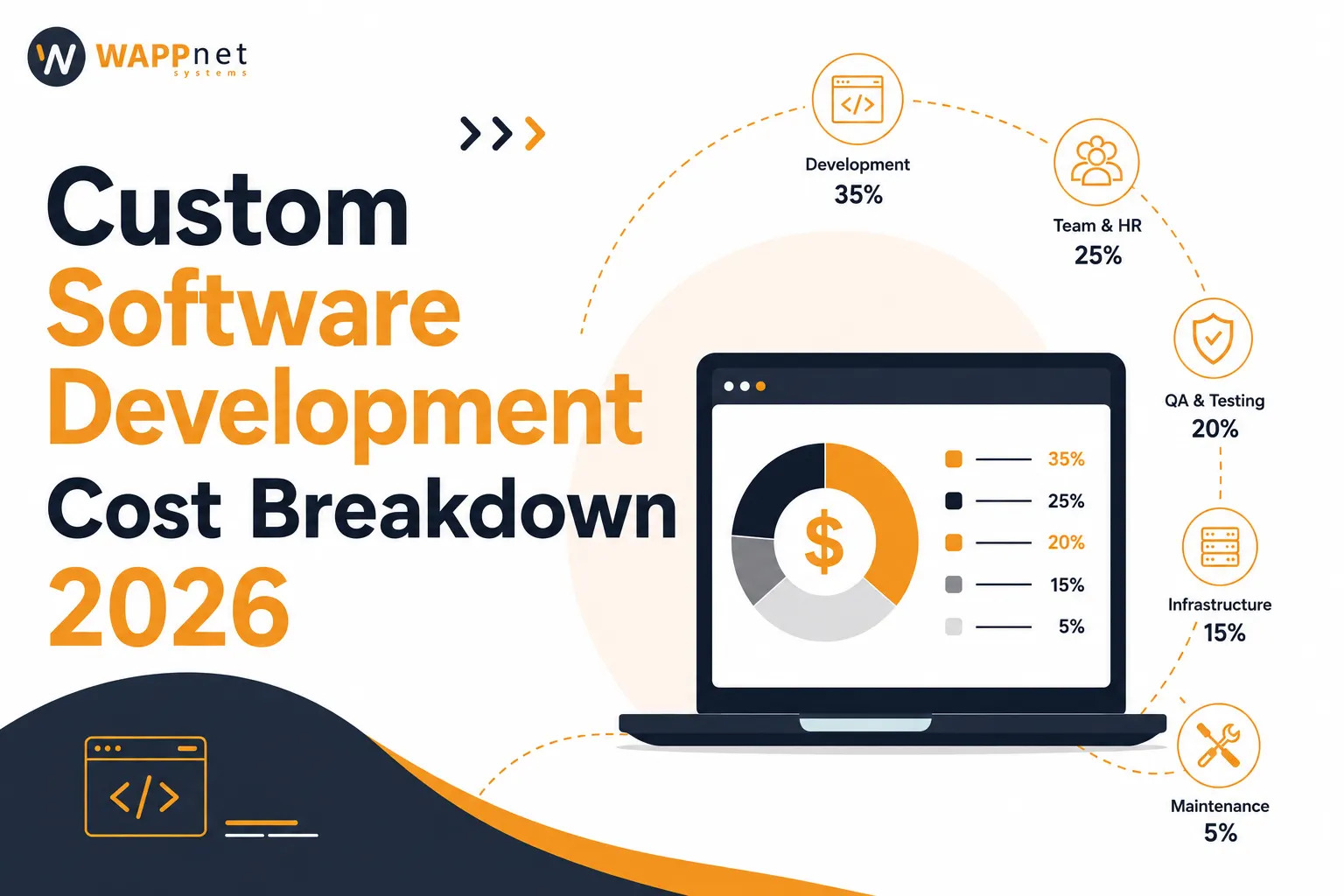
Custom software development cost is the first question every founder and CTO asks before greenlighting a build, and the honest answer in 2026 is that it depends on complexity, region, and team structure.
Keep Reading
Every CTO managing an aging platform confronts the same question: repair what exists, or rebuild from scratch?
Keep Reading

Ask most operations managers at a UK field service company whether their software is good enough, and you'll usually get a shrug. The scheduling spreadsheet still gets jobs out the door.
Keep Reading
Legacy System Modernization ROI measures the financial and strategic return gained from replacing, re-platforming or upgrading outdated technology, relative to what it costs.
Keep Reading
Every enterprise leader wants an AI roadmap, but fewer ask first: will our existing software actually run it? Can legacy software support AI? is one of the most-searched questions among CIOs today, and the honest...
Keep Reading
Budgeting a SaaS product is hard because two products with the same idea can differ in cost by 10x. This guide breaks down SaaS product development cost in 2026 with realistic pricing ranges, regional rates,...
Keep Reading
Custom software development cost is the first question every founder and CTO asks before greenlighting a build, and the honest answer in 2026 is that it depends on complexity, region, and team structure.
Keep Reading
Every CTO managing an aging platform confronts the same question: repair what exists, or rebuild from scratch?
Keep Reading
Ask most operations managers at a UK field service company whether their software is good enough, and you'll usually get a shrug. The scheduling spreadsheet still gets jobs out the door.
Keep Reading
Legacy System Modernization ROI measures the financial and strategic return gained from replacing, re-platforming or upgrading outdated technology, relative to what it costs.
Keep Reading
Every enterprise leader wants an AI roadmap, but fewer ask first: will our existing software actually run it? Can legacy software support AI? is one of the most-searched questions among CIOs today, and the honest...
Keep Reading
Share a brief about your project and get a guaranteed response within 24 hours.


As a law firm, we needed a cloud solutions company to ease our business. We were having problems with our prior supplier for a client's hosted servers and felt something needed to change. Wappnet Systems opened my eyes to the cloud's potential. Our lawyers can access all client information from the office, home, court, or any place with an internet connection using cloud-based software. Furthermore, cloud-based software makes employee onboarding and training much easier because training can be done remotely now that we have the new software.

Wappnet Systems has become a vital part of our team due to their can-do attitude, incredible work ethic, and eagerness to handle customer problems as if they were their own. We've been blown away by their professionalism and performance, and we're continuing to collaborate on new apps as a team. They have been really understanding of our business goals and they have analyzed our company profiles very well to give us the best product. We would enthusiastically suggest Wappnet Systems as a capable technological partner for high-volume web development.

We deal with one company and one fully integrated enterprise solution with Wappnet Systems, which covers all aspects of the Factor business processes, including Integrated Accounting, Human Resources, and Payroll, Work Order / Docket Management, Production Control and Management, Inventory Control and Order Management, Automated Pricing, Dealer Self-Service Portals for order placement and production tracking, Customer Relationship Management, and more.

I have worked with Wappney Systems with application development and consultation. The team that worked on my project was exceptional, and the entire process was flawless. Wappnet Systems has recommended the finest design options for my app. They advised me on the best course of action for my app. They keep you informed about the status of your app at all times. It's been a pleasure to work with their staff. We now have two fantastic apps that were completed in less time than anticipated. Working with Wappnet Systems provided us with a great value-to-money ratio. I would suggest them to anyone looking to get an app developed quickly and for a reasonable price.

During our search for Chatbot programming services, we came across Wappnet Systems. We have increased the motivation and productivity of our staff as a result of their service - a chatbot answers repetitive and straightforward queries for them. We can now give our clients round-the-clock service, which makes them happier and more eager to stick with us. I enjoy how easy it is to interface with other programs — it simply takes one click to connect to your website or Messenger. For the most part, it was a pretty enjoyable experience for me.

Wappnet Systems came through for us when we required customized WordPress development. Many of our employees struggled to understand WordPress and how to make modifications without damaging the system, however, this team of Wappnet Systems was able to accomplish it without breaking anything and without interfering with my existing ordering mechanism. This is perfect since I've had other developers make adjustments, and their work reset mine, requiring me to redo stuff. Wappnet Systems hasn't made me experience this, and I don't expect it to do so.




Wappnet Systems technical skill was outstanding, and they collaborated with our team to assist us to achieve consistent outcomes. They were always willing to work with our schedules and meet our goals. I advise you to choose Wappnet Systems for your future software development project. They not only have a wealth of skill and expertise, but they also encourage project ownership and look after their employees to keep tacit knowledge on the team. The team takes the time to comprehend the project's scope and never an over-commits time or technical outputs. All this contributes to greater project implementation on time, which end customers will appreciate.